English| EUR
Suggested for you
More currencies
Choose a language
Ile-Alatau National Park opens its mountain trails to riders every day from 08:00 to 18:00, with no entrance fee to the park itself. Horse riding services operate independently and require advance booking through local outfitters.
Quick answer
Almaty Kazakhstan horse riding operates daily from 08:00 to 18:00 within Ile-Alatau National Park, located at Sanzhar Zhandosov Street 1. The park charges no entrance fee, though horse rental and guided trail services require separate payment to licensed operators. Morning departures between 08:00 and 11:00 offer the best combination of cool temperatures and clear light for photography along the Tien Shan foothills.
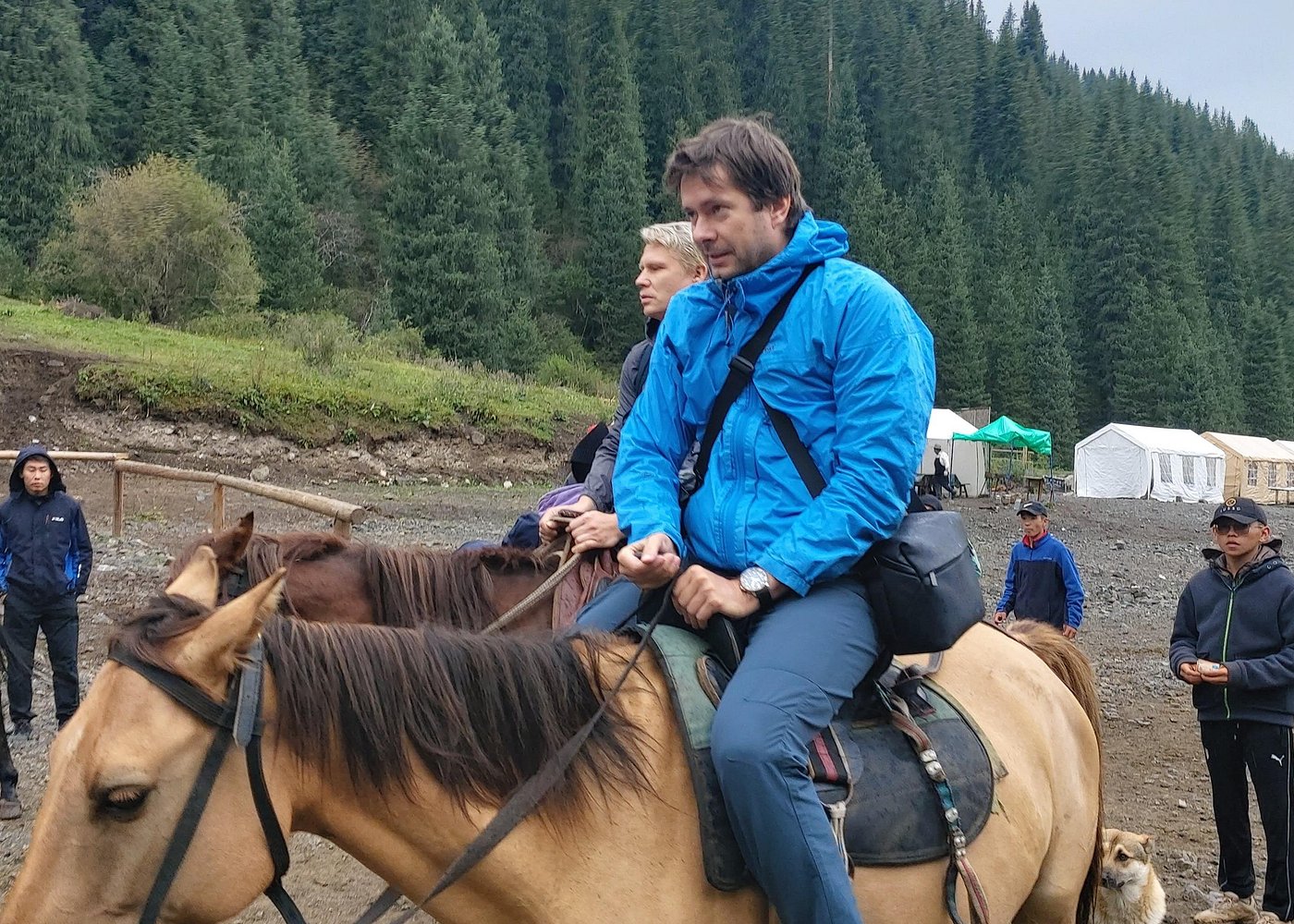
The northern edge of the Tien Shan range drops into Almaty's suburbs so abruptly that riders can leave the city grid and reach alpine pasture in under forty minutes. Ile-Alatau National Park administers more than two hundred thousand hectares of spruce forest, glacial valleys, and subalpine meadow, much of it accessible only on foot or horseback. The park's lower elevations—where most riding routes begin—range between fifteen hundred and twenty-five hundred meters, high enough to thin the air but low enough to keep novice riders comfortable. Almaty horseback riding tours typically follow trails that connect the park's network of seasonal herder camps, Soviet-era rest houses, and unmarked ridgelines used by hunters and shepherds for centuries. Kazakh horses, compact and sure-footed descendants of steppe breeds, handle steep switchbacks and loose scree better than most Western saddle horses. Outfitters base their operations near the park's main access points—Medeu, Shymbulak, and the Kim-Asar Valley—where paved roads give way to dirt track. Riders choose between short valley loops that return within two hours and full-day crossings that climb into the zone where the spruce gives out and only juniper and stone remain. The longest routes reach Big Almaty Lake, a turquoise reservoir held in place by a Soviet-era dam, or push higher to the ridge systems that mark the border between settled Kazakhstan and the empty ranges beyond. Most operators provide tack, but riders supply their own helmets and layered clothing; afternoon weather in the mountains shifts without warning, and a morning that starts clear can end in sleet by fourteen hundred hours. The park's horseback infrastructure reflects its dual identity as both protected wilderness and working landscape. Trail access remains open year-round, though snow closes the high passes from November through April. Summer weekends draw the largest crowds, but the shoulder seasons—late spring and early autumn—offer solitude and the chance to ride through wildflower meadows or golden aspen stands without competing for space on narrow trails.
“Kazakh horses handle steep switchbacks and loose scree better than most Western saddle horses, making them the preferred mount for alpine trail systems.”
The optimal time for horse riding in the Almaty region is during the late spring or early autumn, specifically within the best arrival window of 08:00–11:00. This morning period provides cooler temperatures and superior lighting for mountain trail visibility.
Mild, 15°C to 22°C
Wildflowers bloom and mountain trails are clear of deep snow. This is an ideal time for extended treks.
Warm, 20°C to 30°C
Expect higher visitor numbers. Riders should prioritize early morning sessions to avoid midday heat.
Cool, 10°C to 18°C
Autumn foliage provides clear mountain views. The stable weather facilitates consistent trail access.
—
Midweek arrivals offer the quietest trail conditions. The best arrival window is 08:00–11:00.
Verdict: For the quietest experience and optimal riding conditions, visit on a weekday between 08:00 and 11:00 during the months of May, June, September, or October.
Access to the national park grounds is free of charge. Actual horse riding services involve separate fees determined by individual vendors operating within the area.
Verdict: Visitors pay 0 KZT for park entry, while total costs for horse riding depend entirely on the specific service provider chosen.
The facilities for horse riding in the Almaty region operate on a consistent daily schedule to accommodate visitors. The grounds are accessible throughout the week.
The primary location for horse riding access is situated at Sanzhar Zhandosov St 1, Almaty, Kazakhstan. Visitors typically reach this area by traveling west toward the foothills of the Ile-Alatau National Park.
Direct drive to Sanzhar Zhandosov St 1
Line 211 to Zhandosov Street stop
Follow Al-Farabi Avenue toward the mountains
The best arrival window is 08:00–11:00. Arriving during this period allows for cooler temperatures and better light for mountain trail photography.
Mountain trail riding requires proper gear and preparation for altitude and variable weather conditions.
Everything you need to know about almaty kazakhstan horse riding
To enjoy equestrian trails in the region, visitors typically head to the Ile-Alatau mountain range. Engaging in an Almaty horseback riding tour allows you to explore alpine meadows and pine forests while following professional guides.
Entrance to the national park grounds is 0 KZT, though horse riding services require separate fees. Please note that these service fees are determined by independent providers rather than the park authorities.
The best arrival window is 08:00–11:00 to take advantage of cooler temperatures and superior light for photography. Arriving early also helps you avoid the midday sun and potential afternoon crowds on the mountain paths.
Many trails offer beginner-friendly terrain suitable for family excursions in nature. It is recommended to check with local stables regarding age requirements and specific safety gear for younger riders.
You should prepare for variable mountain weather by wearing layered clothing and sturdy, comfortable footwear. Bringing sun protection, water, and a camera is also recommended to capture the landscapes during your equestrian adventure.
The location is situated at Sanzhar Zhandosov St 1, Almaty, Kazakhstan, which serves as a gateway to the mountains. Visitors often reach this area via private transport or local taxi services to access the equestrian facilities.